
High-Quality Sewage
Consistently low TSS and clear treated water.
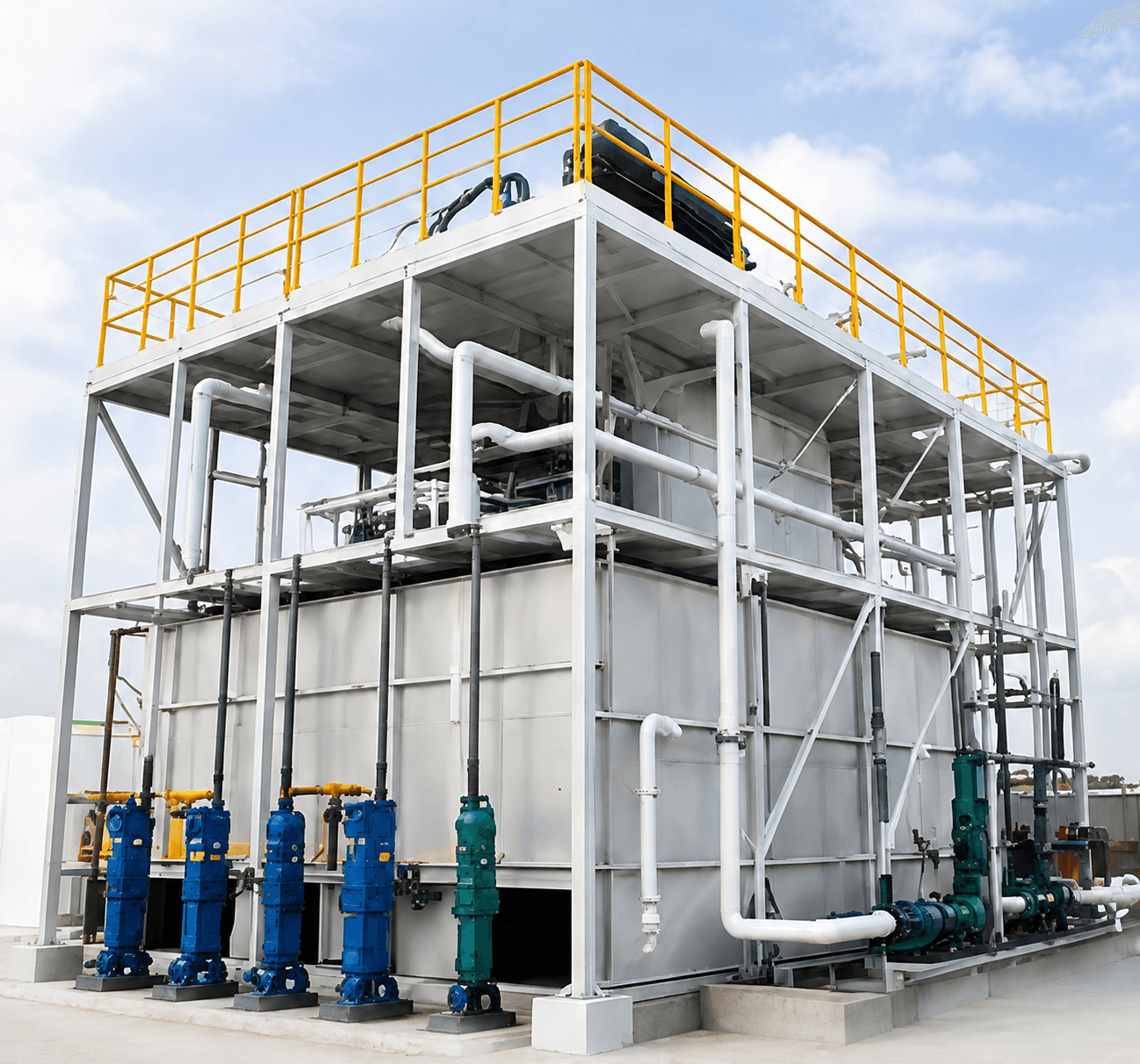
Shivsu Watek's MBR Sewage Treatment Plant combines biological treatment with membrane filtration to deliver high-quality treated water for discharge or reuse.
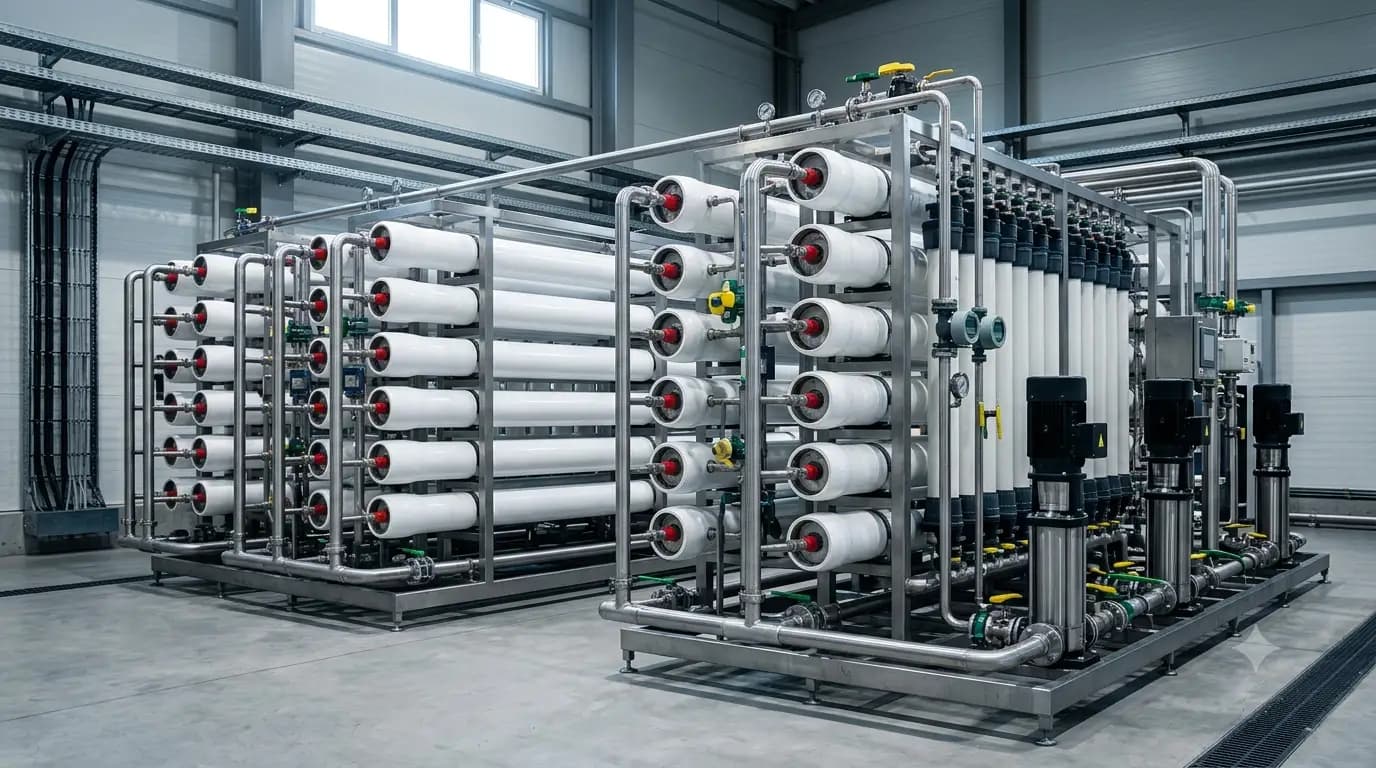
An MBR (Membrane Bioreactor) STP is an advanced wastewater treatment system that integrates biological degradation with membrane filtration.
The membranes act as a physical barrier that retains suspended solids and microorganisms, producing clear, low-turbidity sewage consistently. Unlike conventional activated sludge systems, MBR uses microfiltration or ultrafiltration membranes for solid-liquid separation and retains biomass within the biological reactor.
The MBR process combines biological wastewater treatment and membrane filtration into a single integrated treatment system.
Removal of large solids, screenings and grit.
Balances flow, pH and pollutant load for stable operation.
Microorganisms break down organic matter in aerobic/anoxic conditions.
Ultrafiltration or microfiltration membranes retain biomass and suspended solids.
Clear, treated water is collected for discharge or reuse.
Excess sludge is wasted out and managed safely.
Consistently low TSS and clear treated water.
Smaller footprint saves valuable space.
Membrane barrier ensures reliable solid-liquid separation.
Treated water can be used for selected non-potable applications.
Independent control of biological and filtration processes.
Performs efficiently with fluctuating wastewater characteristics.
Reduced sludge production and disposal costs.
Configuration can be adapted to capacity and treatment needs.
Shivsu Watek's MBR Sewage Treatment Plants can be designed for a wide range of industrial wastewater treatment requirements.
The exact treatment configuration depends on wastewater composition, COD/BOD levels, suspended solids, colour, toxicity, flow variation and required treated-water quality.
Industrial sewage can vary significantly from one manufacturing process to another. Shivsu Watek develops application-specific MBR STP solutions based on wastewater characteristics and the customer's treatment objectives.
Systems are designed around the actual wastewater rather than relying on a generic plant configuration.
| Feature | Conventional Biological STP | MBR STP |
|---|---|---|
| Biological treatment | Yes | Yes |
| Solid-liquid separation | Clarifier | Membrane |
| Suspended solids removal | Dependent on settling | Membrane barrier |
| Plant footprint | Generally larger | More compact |
| Sewage clarity | Depends on settling performance | Typically very low suspended solids |
| Biomass retention | Limited by settling | High membrane retention |
| Water reuse potential | Requires additional treatment in many cases | Well suited as a treatment step for reuse |
| Automation | Optional | Can be highly automated |
The right technology depends on wastewater characteristics, project economics, space availability and final treated-water requirements.
Wastewater treatment is approached as an engineering requirement rather than a one-size-fits-all product.
Treatment processes are selected according to wastewater characteristics and project requirements.
MBR combines biological degradation with membrane filtration for efficient solid-liquid separation.
The system can be configured where available installation space is limited.
Control systems can be incorporated to monitor and manage important plant operating parameters.
MBR can be combined with tertiary treatment, disinfection, RO or other polishing technologies for reuse applications.
Support can extend from system engineering through installation, commissioning and ongoing technical requirements.
Water conservation is becoming increasingly important for industries facing rising freshwater demand and stricter wastewater management requirements.
An MBR STP can form an important part of an industrial water recycling system by producing a high-quality treated-water stream that can undergo additional polishing where required.
The final treatment train is selected based on the required quality of recycled water and the nature of the industrial process.
Membrane performance is an important consideration in every MBR wastewater treatment plant. Accumulation of solids and other foulants on membrane surfaces can affect permeability and energy requirements.
A properly engineered MBR system therefore incorporates pretreatment, aeration, operating controls and membrane cleaning strategies.
Reduce solids and foulants before membrane treatment.
Support stable biological and membrane operating conditions.
Cleaning and fouling-control procedures help maintain performance.
Planned monitoring and maintenance help maintain membrane performance over time.
Depending on the final water quality and applicable regulations, treated water from an MBR system may be considered for selected non-potable applications.
Suitability for a particular reuse application should be determined through water-quality analysis and applicable regulatory requirements.
Answers based on the MBR STP content and application considerations provided by Shivsu Watek.
MBR stands for Membrane Bioreactor. It combines biological wastewater treatment with membrane filtration, using microfiltration or ultrafiltration membranes to separate treated water from biological solids.
An MBR STP is an industrial wastewater treatment plant that combines a biological reactor with membrane filtration to treat effluent and produce high-quality treated water.
The primary difference is the solid-liquid separation method. Conventional biological systems commonly use clarification, whereas MBR systems use membrane filtration to retain biomass and suspended solids.
Yes. MBR technology is used in both industrial and municipal wastewater treatment. Suitability for a particular industrial effluent depends on its composition, treatment objectives and operating conditions.
Yes, MBR can provide a high-quality treated-water stream that may be suitable for selected non-potable reuse applications or further treatment. The required additional treatment depends on the intended reuse.
Yes. Membrane systems require appropriate cleaning and fouling-control procedures to maintain performance. Cleaning frequency and method depend on wastewater characteristics, membrane type and operating conditions.
The space required depends on plant capacity, wastewater characteristics, process configuration and equipment selection. MBR technology can offer a more compact alternative to some conventional biological treatment systems.
Every industrial wastewater stream is different. Send us your wastewater flow rate and treatment requirement to discuss the right MBR STP configuration for your application.